Monday, September 7, 2015

Leah Atwood

My day with Leah Atwood:
But first, a peek at her newest release: 

Come To Me Again


Dominic Sellers dreamed of escaping a life of poverty and making a living playing music. On the brink of giving up, he’s offered the chance of a lifetime to be the new guitarist for Bryce Landry. His life finally aligned with his goals, but something was missing.

Four years ago, Maisy Rothchild walked away from her fiancĂ©—her best friend and the only man she’d ever loved. She’d give anything to go back and change that day, but that wasn’t possible. There were factors that complicated the situation, things she couldn’t tell anyone.

When she makes a bold move to restore their friendship, can the same love that tore them apart bring them back together?

___________________ 
What a privilege for me to hang out with Leah for a little while and chat with her about her books. I’m so proud for this opportunity.

Q. How many books have you published? How many series?

Oh man, you didn’t tell me I’d have to do math. J  Let’s see.   I began with the Mail-Order Matches short stories.  There are nine of those.  The Brides of Weatherton series currently has three book, but will have five total and the Come to Me Series has three, and will get a bonus Christmas novella. Last but not least is the Freedom Bride series on which I collaborated with Susette Williams.  There are six in that series, three of them from me. So let’s see—that’s eighteen that I’ve published and are available.

Q. What do you enjoy most about writing historical fiction, and how did you get started in that genre?

They say to write what you love and the period of American westward expansion has always fascinated me.  The men and woman who pushed west and paved new roads for everyone else have such stories or bravery, courage and perseverance.  I would love if time-travel existed so I could experience it firsthand, but since it doesn’t, I have to live vicariously through my characters.

Q. You excel at historical fiction. Why did you decide to venture away from that and start a new modern day series?

Contemporary romance was always part of the equation, but the story I was working on never felt right.  A conversation with a friend was the catalyst for Come to Me Alive and the characters came to life, begging for more stories.  Funny, that series had spurred new ideas for the original series I planned but could never get the plots where I wanted, and it will now be a spin-off from the Come to Me books.

Q. You have a unique talent for making your stories light hearted and charming. Is that something you do deliberately, or do you even realize you do so?

Is there such a thing as a deliberate subconscious?  I write “inspirational romance to make your heart happy,” so there is a definite decision to keep them light-hearted, but I let the characters write the story. Seriously.  If you ever see me talking to no one in particular, I’m not crazy, but probably talking out a conversation between two characters.

Q. You have a series about mail order brides. How did that come to be?

Again, the idea absolutely fascinates me. Marriage is hard enough under normal circumstances, but to a complete stranger? And to move clear across the country in many cases?  My husband (then fiancĂ©) and I knew each other a very short time when I moved across the country to stay near him when he transferred, and even though I knew him that was scary (but very rewarding!).   I don’t know that I would have had the courage to make that move had he been a complete stranger.

Q. You have been transitioning several of your novels into audio books. Do you plan to make all of your novels available with audio?

I do. I actually made a contract offer today for another one.  It’s not a quick process, but hopefully by next summer my entire backlist will be available and all new works will have an accompanying audio version within two months.

Q. What is next for you?

Right now, I’m working on two Christmas novellas that will tie up the Brides of Weatherton and Come to Me series.  I have a fun little contemporary series planned for this winter about modern day marriages of conveniences, and then next year, the to-be-titled Come to Me spin-off and a new historical series set in South Dakota.

Q. You are completely a self-start author, beginning with your first book, and you are very successful. Why did you choose to be self-published, knowing that you had opportunities to be traditionally published?

For me, this was the best choice. I have the freedom to write as I please, juggle contemporary and historical series.  I have full control over everything I put out and I can get it to my reader’s in a quicker timeframe than traditional publishing would allow. Each person has to make their own decision based on what’s best for their goals and needs—which might be going the trad pub route for someone else, but for now, I’m very happy with my choice.

Q.  How much discipline does it take to be a full time writer? Can you describe your ordinary work week?

It takes a lot! I don’t have a set schedule because I try very hard to maintain a balance between work and family. Until the last few weeks, I still had a child home with me, so it meant a lot of late nights and early mornings to maintain a full writing schedule. Now it’s a bit easier and I can do a solid six hours during the day and only a few in the evening.  On any given week, I probably put in about fifty hours, but not all of that is strictly writing.  There’s a lot of behind the scenes work that also comes with the territory, but those tasks help break up the mental wear of straight writing.

Q. Who is your favorite writer?

Other than you?  Haha.  Let’s see, that’s another toughie.  I absolutely love Rosanne Bittner’s books and really hope she publishes more faith fiction.  Where Heaven Begins is one of the most beautiful stories I have ever read! It stays with you long after you read it.

Q. What advice would you give an emerging writer who wants to follow in your footsteps?

Writing is a fun and rewarding job, but it requires a tremendous amount of work and dedication. Learn your craft. Find a network of other writers from whom who can learn and grow.  Always be willing to learn, and in return help others who are just beginning.

Bonus round:
Q. What was your favorite Christmas present ever?

I’m not sure that it’s my favorite, but it’s the most memorable. Back in the day when Nintendo first came out, my parents bought it for me and my brothers to share. For some reason, we were allowed to open it Christmas Eve. (Generally, the Christmas Eve present was reserved for pajamas, but knowing how my mom, she was super excited to give it to us.)  At some point during the middle of the night, my brothers and I all woke up and sat in front of the TV playing Super Mario Brothers.  My dad came in sometime around three and made us go back to bed, but I still look back with a smile every time I think of it.  It’s one of those fun memories we still joke about. By the way, Santa’s cookies were still on the table when we first started playing. 

Q. How can readers keep up with what’s going on in your world?

Follow me on Facebook

Or Join my Newsletter

What a great interview with a top notch writer! I deeply respect Leah’s writing craft and I look forward to what she has in store for the future. Leah has a very positive and light hearted way of expressing herself and those qualities define her characters. If you’ve never had the opportunity to read her books, I strongly encourage you to do so—sooner rather than later. Leah delivers time and again, and I think she will continue to improve her flawless method as she goes. Perfection being perfected.

You’ll see!

Tuesday, August 25, 2015

Connecting with your Kids: Fort Bella

Difficulty level: high
Tools needed: Axe, shovel, power drill, level, power saw, tape measure
Build time: 1 week
Cost: around 300.00
Spending time with my kids? Priceless!

I love spending time with my kids, and they are always at an age when they need to spend time with me. This project took us two years to finish. TWO YEARS! It should have taken 1 week, but, shortly after we started building, I fell down and broke some ribs, and then winter came. The next year I was sent out of town for my work and didn’t have any summer time left, and then winter came. Well, this year, I hurt myself again! (Apparently, I’m not 20 anymore, but I still try to work like I am.) But, despite it all, I was determined to finish this project.

Living in the Idaho panhandle, we have resources you might not have. For instance, I was able to buy enough logs to build this fort out of real pine trees. But, you can do the same thing using fence poles, especially if you buy the poles that are already pointed. They look like pencils!

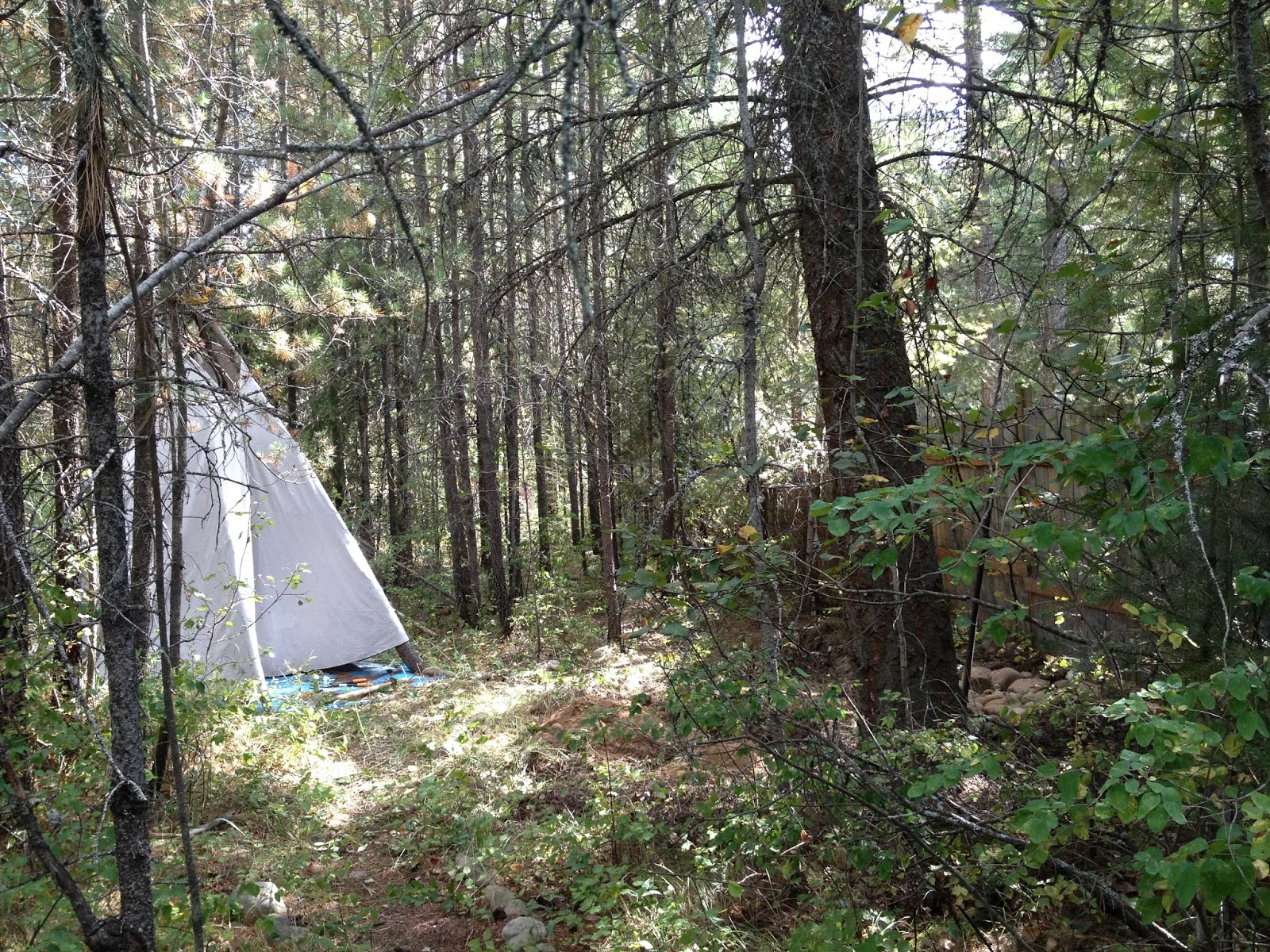
So, our first step was to select a building site. This is what our back yard looks like....
The previous year, we  built a teepee for the kids near the neighbor's fence on the side of the yard. That site only allowed for two walls to be constructed, but the kids wanted the teepee and the fort to be close together.
We will place it next to the teepee
We began the task of digging out the footings...
We never found gold...just river rocks.


The footings were dug 18-24 inches deep. In some places, 18 inches was all I could get. We will use the rocks later to place around the logs and help reinforce them. So, footings are dug, we need logs. I ordered a load of logs to come to the house. I paid 10.00 for each log. They were 12 feet long and about 10 inches across. I wanted logs that were 6-8 inches, but that's what was delivered. 


You have to be super careful doing this. The axe will glance off the log. Trust me. This is not something you do carelessly. 


The next difficult task is to get the logs from point A to B. I decided to use some furniture moving straps, which allows my arms to be the forklift. It worked, but it was a hard task. The kids helped, too. They weren't as happy about this part of the process.
The kids each held one end of the straps
It took coordination and patience to get a rhythm together.
This was not as easy as it looks, but we figured it out.
Next, we have to place the logs into the footings. The kids had to help me. I did the lifting, and they helped brace them in place until I could secure them using some 2X4s and five inch decking screws.


You want to make sure the 2X4s are level, as they will be used to for the decking in the next step.


I placed some cross braces took keep everything from moving around. This is the point where I was injured and we had to put the project on hold. For 2 years! When we got back in motion, everything was just as we left it, which is a good thing. Next, we needed to build the decking. We designed the fort to have two decks. The lower deck serves as a step to get to the upper deck. This is why we didn’t cover the entire surface of the lower deck. Plus, my son thought it would be cool to have an opening to crawl through to the ground below. The first level is more of a stepping platform to the upper level. I placed some concrete blocks to use to support the decks across the length of the triangle shaped decks. The span from one end to the other was about 11 feet long. So, I placed the block, and used a 4X4 post to help support the 2X4 frame. We then used 2X6 boards to cover the decks. Don't forget to place at least 1/8 inch between the boards to allow for drainage. 

Seth learned a lot about using power tools on this project, and demonstrated skill in his work by the end of the day. He and I had a blast working together! He’s already talking about doing the same thing with his own kids in the future.
The concrete piers help reinforce the span.
Seth loved using the tools and learned a lot!
So, because we needed to maximize space because our building site was limited, we built our walls where the corner was more like 50 degrees rather than a true 45. This made all of our cuts difficult. But, once we figured them out, we were able to get the decking in place in just a few hours. Some tell me I should have run the boards across rather. I’m not sure it matters. I consulted several contractors, and got several opinions. This is the path we chose.


I opted to buy pressure treated lumber, which would help weather our weather. It’s wet here. We get lots of rain. And we get snow in the winter, so longevity is an issue with outdoor decks. The problem with pressure treated lumber is the exposure to chemicals that are used to preserve the wood. One way around this problem is to buy redwood decking materials, which is expensive. Redwood lasts longer than regular pine or fir, and is fairly bug resistant. If you can afford to use redwood, then please do so. Another great option is to use a product such as Trex, which is composite decking. This product is awesome and should last about 25 years. Again, the problem is the price. It is more expensive than buying wood decking. So, I chose to use pressure treated fir.

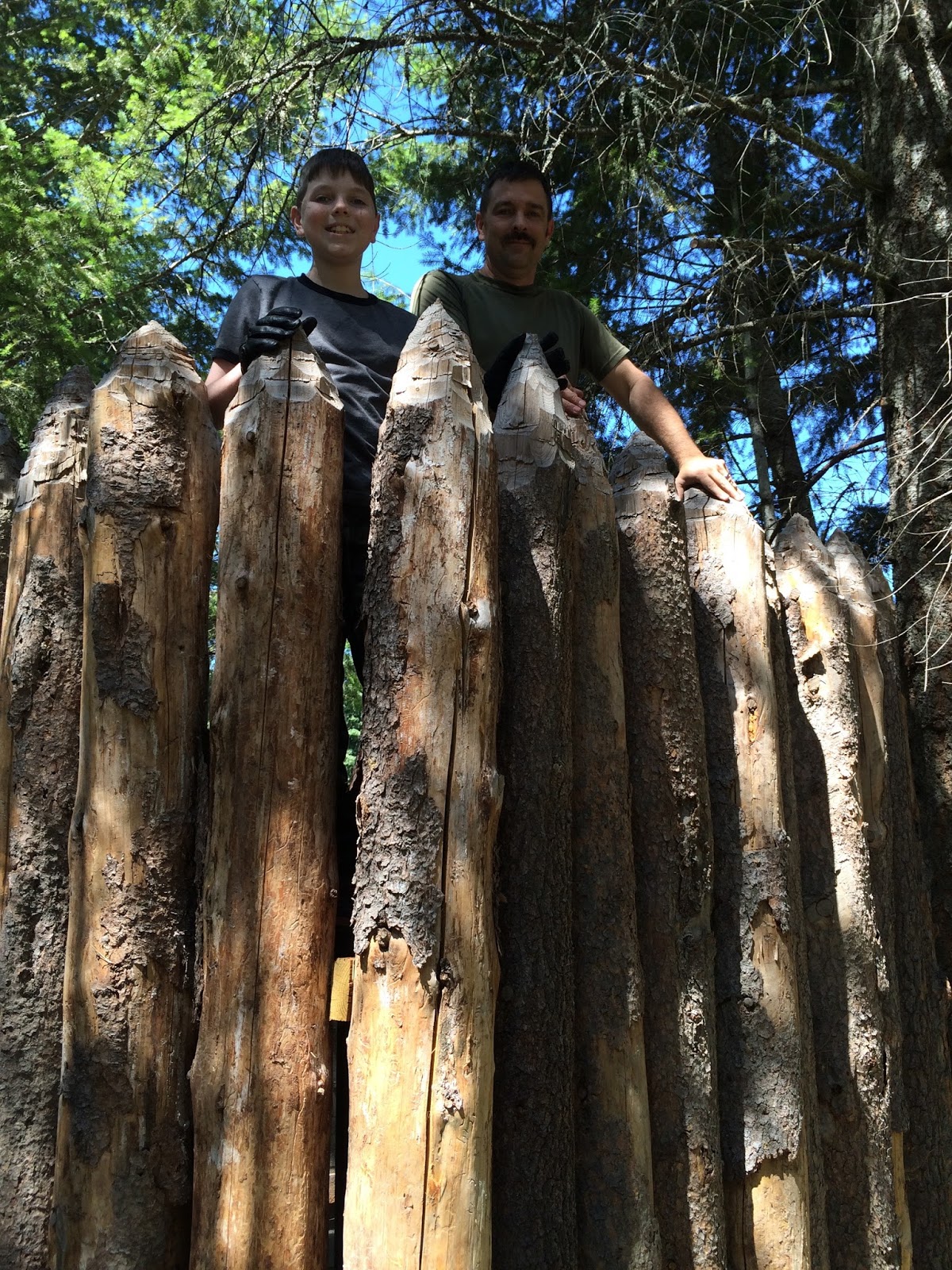
This was a labor-intensive project. Shaping the logs and transporting them to our building site was tough. Standing them in place required two adults or one adult and two strong kids. Building the deck was not terribly difficult, and was certainly the funnest part of the project. But, look at those smiles!


The only thing that remains is to add a flag pole!


Sunday, June 21, 2015

A Father's Day Tribute--The Walking Hunters


Wendy Inman ca 1985
I grew up in the country in West Texas on a cattle ranch.  Every fall, we were besieged by would-be hunters who wanted a free place to enjoy their sport.  My father was constantly heading off trespassers who claimed to have permission from the owner to hunt.  Well, my father was the only one who could grant permission, and seldom did he allow anyone access to the land.

One particular day, he was hounded by phone calls of people wanting to pay us a visit.  To each person the answer was the same—no.  Well, around 2 o'clock that afternoon, we came across a vehicle parked in the middle of a ranch road, about 2 miles from our house.  My father fought his temper and decided that he should try a more diplomatic response in order to impress on the hunters the importance of integrity and honesty.

He pried off their hubcaps and removed all the lug-nuts, save one, on each of the tires.  With the lug-nuts gone, the vehicle couldn’t be driven anywhere, as the wheels would come off.  He then wrote a note to the owner that said, “If you want your lug-nuts back, you can find them at the house.”  He then drew a map where “X” marked the spot.

(Not actual vehicle...)
Three hours later, an angry and weary mob of four was making their way down the long dirt road to our home.  My father was waiting for them on the porch—and in the shade—I might add.  By the time the rag tag hunters walked all day hunting and then walked another two miles in the heat… well, they were nearly exhausted.  They had worked themselves into a lather with anger and threats of what they would do to that “so in so, what stole our lugs...”  They were so worn down by the time they reached us that most of the starch had been taken out of their shirts.

Oh, they were mad all right, but one look from my father told them all they needed to know—now’s not the time to start something. 

He’d backed them into a corner and won the battle long before it ever began.  If we had waited there by that vehicle in the pasture, then we were in for a show down.  He taught me that patience and creative discipline could outsmart brawn and anger.  Those men had to apologize to my father before he would return their lug-nuts.  If they didn’t cooperate with him, then they faced a much longer 17 mile walk to the nearest town.  The story got out about the walking hunters and we started getting fewer inquiries about hunting. 

It seems the master plan was indeed borne from a master.

Saturday, June 6, 2015

D-Day, A View From The Section 8


D-Day, June 6, 1944, Normandy
“We flew so low over the beach that I was able to fire on the Germans below. I could see the Army moving along the beaches, but I couldn’t tell exactly what they were doing.” PFC George Pruitt, Ball Turret Gunner
_____________________________________________________

On June 1, 2008, as the summer heat pressed into the windows in Snyder, Texas, I sat interviewing George Pruitt, a former Ball Turret Gunner aboard a B-17D Bomber, who was stationed in England during his tour of duty in World War II. The Ball Turret is the small bubble located on the belly of the B-17D Bomber, AKA "Flying Fortress."

A native of Ardmore, Oklahoma, George had been working with the Civilian Conservation Corps, otherwise known as the CCC, when he heard the news about the Japanese bombing Pearl Harbor. “I had been working in Wyoming and was headed back home when our bus stopped at a hole-in-the-wall diner in Denver, Colorado for lunch. We heard the news broadcast announce the attack. The next day, I joined the Army Air Corps.”

George didn’t wait to be drafted. “No, I knew what I had to do immediately. My brother joined on the same day, but neither of us knew it.” I asked him if he was worried about joining the war, but he smiled and replied, “No, we knew we were going to win before we ever left.”

But leaving took a while. First, he had to endure basic training at Randolph Field in San Antonio, Texas. From there, he attended a series of schools from South Dakota to Pyote, Texas training him how to be a gunner and how to function as a bombardier. He recalled flying over Carlsbad, New Mexico, where they dropped dummy bombs on targets carved out of the dessert for just such a purpose. (These targets can still be seen in Carlsbad, and dummy bombs made from concrete are occasionally unearthed on these sites.)

Once his training was complete, he was assigned to the 452nd Bomb Group/729th Bomb Squadron, and he and his combat crew flew to England and made a home at Deopham Green, just outside of Attleborough in Norfolk. Once they were settled, the flight engineer, Richard J. Walsh, suggested they name their plane, “Section 8”, which was heartily agreed upon. Walsh even managed to get an eight ball painted on the plane. Of course, most Americans will recognize the military term, section 8, which references a discharge based on an assessment of being psychologically unfit or possessing character traits which made one unfit for duty. They figured they were crazy to get in a plane and fly over Germany. Lt. Paul E. Suckow was the pilot for plane #42-31784. Section 8 was now in service.

Throughout the course of a year, the crew of the Section 8 flew 30 missions, which was required of each crew before they could be returned stateside. They had their share of harrowing experiences during their tour of duty. George recalled one instance when a German fighter, was making a sweeping run at them from their right. He began firing at the plane and hit it when it was only 400 yards away. “He’d have gotten us if I hadn’t shot him first,” he recalled, with a distant glance into the past, a tribute to his memory.

And he hadn’t forgotten when the Section 8 was shot down near the end of their tour. “We knew we were going down immediately. They hit the engine and it was all over. We had to ditch the plane into the English Channel. I watched as that plane hit the water and I will never forget how the water flooded over it so quickly.” The crew managed to parachute to temporary safety and they didn’t loose any crew members in that incident. “We were floating in the Channel for about an hour and a half when the shore patrol picked us up. I’ve never been so glad to see a boat in all my life.” George recalled with a smile, “We were given a ditching citation and we immediately became members of the Gold Fish Club.” Their final mission occurred on D-Day. “We left early that morning. I think it was around 2 AM or so. But we were over Normandy just after the sun came up. We bombed several structures and some barracks, and we swept the Germans with our machine guns.”

Of course, their excitement wasn’t limited to their missions in the air. “One night, the RAF (Royal Air Force) shot up our barracks and made us mad. They said it was an accident, but man, what an accident.” Fortunately, no one was hurt. “No, it was mostly just a nuisance.”
Perhaps the most interesting occurrence for George was when he was on leave and was hitchhiking back to the airfield. “We hitched a ride everywhere we went. One day, I was hitching a ride and was surprised to open the door and see Queen Elizabeth. Of course, she was still a princess then, but she was very nice and we chatted for several minutes until they dropped me off.”

The Queen wasn’t the only high profile figures he encountered overseas. “Once, I met both Doris Day and Betty Grabble when they came through doing a tour. I think meeting Doris Day was the best part of my being there.”

After his part was played, George and the crew returned stateside and cheered on the boys who continued the fight. “Those were different days. Everyone knew what their part was, and everyone did what was expected of them. None of us complained; we just did what we had to do.” Once back in the States, George met Martha in Fort Worth, Texas, who was working at piecing together planes for the war cause. “She was my ‘Rosie Riveter’, and I knew I better marry her if I knew what was good for me.” Then, after a scowl from Martha, he winked at me and clarified. "She wasn't Rosie Riveter; she was much prettier." (Martha wanted clarification that she was never, ever a riveter. I think George had a way of teasing his wife, right up to the very end.)

The Pruitts were happily married for more than 60 years, and resided in Hamlin, Texas for most of those years. George died shortly after this interview, and Martha now lives in Snyder, Texas, where she is continually surrounded by family. I count it an honor to have an opportunity to sit in the presence of such great men as George Pruitt. Without the contribution those men and women made, we’d be drinking French wine with German labels, and the maps would be drawn differently than they are currently.

Thank you, George, for the sacrifice you were willing to make in order to guarantee our freedoms. May God richly bless you and your family.

Part II of George's story taken from his personal journal .